
Why visit Poompuhar? Few destinations combine a quiet Bay of Bengal coastline with the memory of an ancient Tamil port city, literary heritage and underwater archaeological discoveries.
Where the Kaveri Meets the Sea
Poompuhar is a historic coastal town in Mayiladuthurai district, Tamil Nadu.
It stands near the point where the River Kaveri reaches the Bay of Bengal.
The town was historically known as Kaveripoompattinam or Puhar and developed as an important port in ancient Tamilakam.
Today, Poompuhar attracts visitors interested in beaches, Tamil literature, Chola history, marine archaeology and coastal landscapes.
Quick Visitor Overview
| Information | Details |
|---|---|
| Destination | Poompuhar Beach and heritage area |
| Historic Name | Kaveripoompattinam |
| Location | Poompuhar, Mayiladuthurai district, Tamil Nadu |
| Destination Type | Beach, ancient port-city site and maritime heritage destination |
| Known For | Sangam literature, Early Chola connections, coastal archaeology and the Marine Archaeological Site Museum |
| Museum Schedule | Verify the current schedule before visiting |
| Beach Safety | Follow local sea-condition warnings and avoid unsafe water entry |
An Ancient Port City
Poompuhar was once a flourishing port city known as Kaveripoompattinam.
Official district information identifies it as an important centre associated with the Early Cholas.
Its position near the mouth of the Kaveri made it suitable for maritime trade and movement between the river and the sea.
The historical settlement became part of Tamil cultural memory through literary descriptions of merchants, ships, markets and urban life.
Poompuhar in Tamil Literature
Poompuhar holds a prominent place in classical Tamil literature.
It is closely associated with Silappathikaram, one of the great Tamil epics.
The literary descriptions present Puhar as an active port city with commercial streets, residential quarters, festivals and maritime connections.
Literature should not be treated as a modern street map, but it provides valuable insight into how the city was remembered in Tamil tradition.
What Makes Poompuhar Special?
A Beach with Historical Context
Poompuhar Beach is not only a place to see the sea.
The surrounding landscape is connected with an ancient port, river systems, coastal change and archaeological research.
This historical context gives the beach a different character from a purely recreational seaside destination.
Maritime Archaeology
Archaeological research has investigated remains connected with the coastal and underwater history of Poompuhar.
The Tamil Nadu Department of Archaeology established a Marine Archaeological Site Museum to display objects recovered through underwater exploration.
The museum was inaugurated in 1997 according to the department.
Coastal Change
The Poompuhar coastline has changed over long periods.
Erosion, river movement and marine processes are important to understanding the ancient settlement and its surviving remains.
Visitors should avoid presenting every visible stone or structure as an ancient artefact unless it has been officially identified.

The Marine Archaeological Site Museum
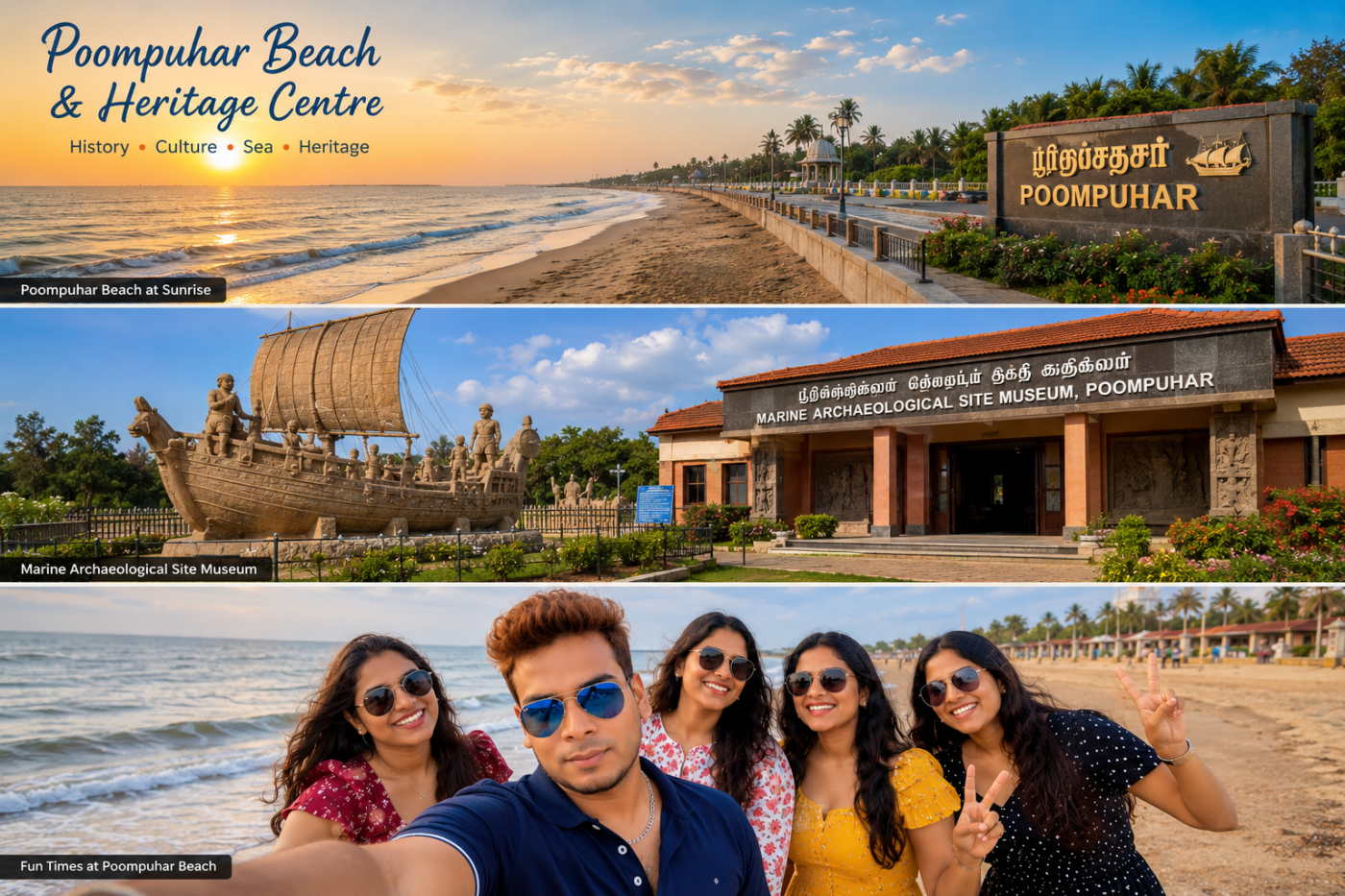
The Marine Archaeological Site Museum is one of Poompuhar’s most relevant heritage attractions.
It was created to exhibit antiquities recovered during underwater archaeological exploration.
Official archaeology information describes it as a specialised museum devoted to underwater discoveries.
The department currently lists visiting hours from 10:00 AM to 5:00 PM and Friday as the weekly holiday.
These arrangements can change. Confirm the latest schedule before travelling.
How to Visit Respectfully
- Follow museum instructions and photography restrictions.
- Do not touch exhibits, display cases or archaeological materials.
- Keep voices low inside exhibition areas.
- Supervise children carefully.
- Do not assume every gallery or section is open.
- Check current admission arrangements directly before visiting.
What Can Visitors Experience?
Walk Along the Coast
The beach offers open views of the Bay of Bengal and the changing coastal sky.
A shoreline walk can be enjoyable when weather and sea conditions are suitable.
Remain away from unstable edges, strong waves and restricted areas.
Watch the Sunrise or Evening Light
The east-facing coast is associated with sunrise views.
Evening light can also create pleasant colours across the beach and promenade areas.
Visibility depends on clouds, rain and seasonal weather.
Explore the Heritage Context
A meaningful visit should include time to understand ancient Kaveripoompattinam rather than treating Poompuhar only as a beach stop.
Read official museum information, observe archaeological displays and learn how maritime trade shaped coastal Tamil communities.
Observe Local Coastal Life
Fishing and other coastal livelihoods remain important in the wider region.
Visitors should respect working areas, boats, nets and private property.
Always ask permission before photographing local residents or workers closely.

Beach Safety
The Bay of Bengal can have strong waves, currents and rapidly changing sea conditions.
- Do not assume that swimming is safe.
- Follow all local warnings and instructions.
- Keep children within close supervision.
- Avoid climbing wet rocks or unstable coastal structures.
- Stay away from the water during severe weather.
- Do not enter restricted fishing or archaeological areas.
- Do not visit isolated shoreline sections alone after dark.
Important: Sea conditions and coastal access can change quickly. A calm-looking surface does not guarantee safe swimming or water entry.
A Simple Visit Plan
- Start with the heritage context. Read about ancient Kaveripoompattinam before reaching the beach.
- Visit the archaeological museum. Confirm the opening schedule and weekly holiday first.
- Explore permitted heritage areas. Follow all barriers and official instructions.
- Walk along a safe beach section. Keep away from strong waves and unstable structures.
- Allow time for photography. Capture the coast without disturbing local residents or working areas.
- Leave before conditions become unsafe. Avoid isolated coastal areas after dark.
What to Carry
- Drinking water
- Sun protection
- A hat or cap
- Comfortable footwear
- Light rain protection during uncertain weather
- A charged mobile phone
- A reusable bag for personal waste
Formal visitor facilities may vary between the museum, heritage areas and beach sections.
Responsible Heritage Travel
- Do not remove shells, pottery fragments, stones or suspected archaeological objects.
- Report a potentially important discovery to the relevant authority instead of moving it.
- Do not write on monuments, walls or public structures.
- Do not enter fenced excavation or conservation zones.
- Do not leave plastic or food waste on the beach.
- Respect local livelihoods and private property.
Photography Guidance
Poompuhar offers coastal, architectural and documentary photography opportunities.
Photography inside the museum may be restricted.
Ask permission before photographing people, fishing activities or private buildings.
Drone photography should not be attempted without all required legal and local approvals.
Nearby Places to Explore
Tharangambadi
Tharangambadi, also known as Tranquebar, is a coastal heritage town known for Danish-era architecture and Fort Dansborg.
The fort contains an archaeological museum operated by the Tamil Nadu Department of Archaeology.
Sirkazhi
Sirkazhi is an important nearby town associated with temples, Tamil religious history and regional transport connections.
Chidambaram
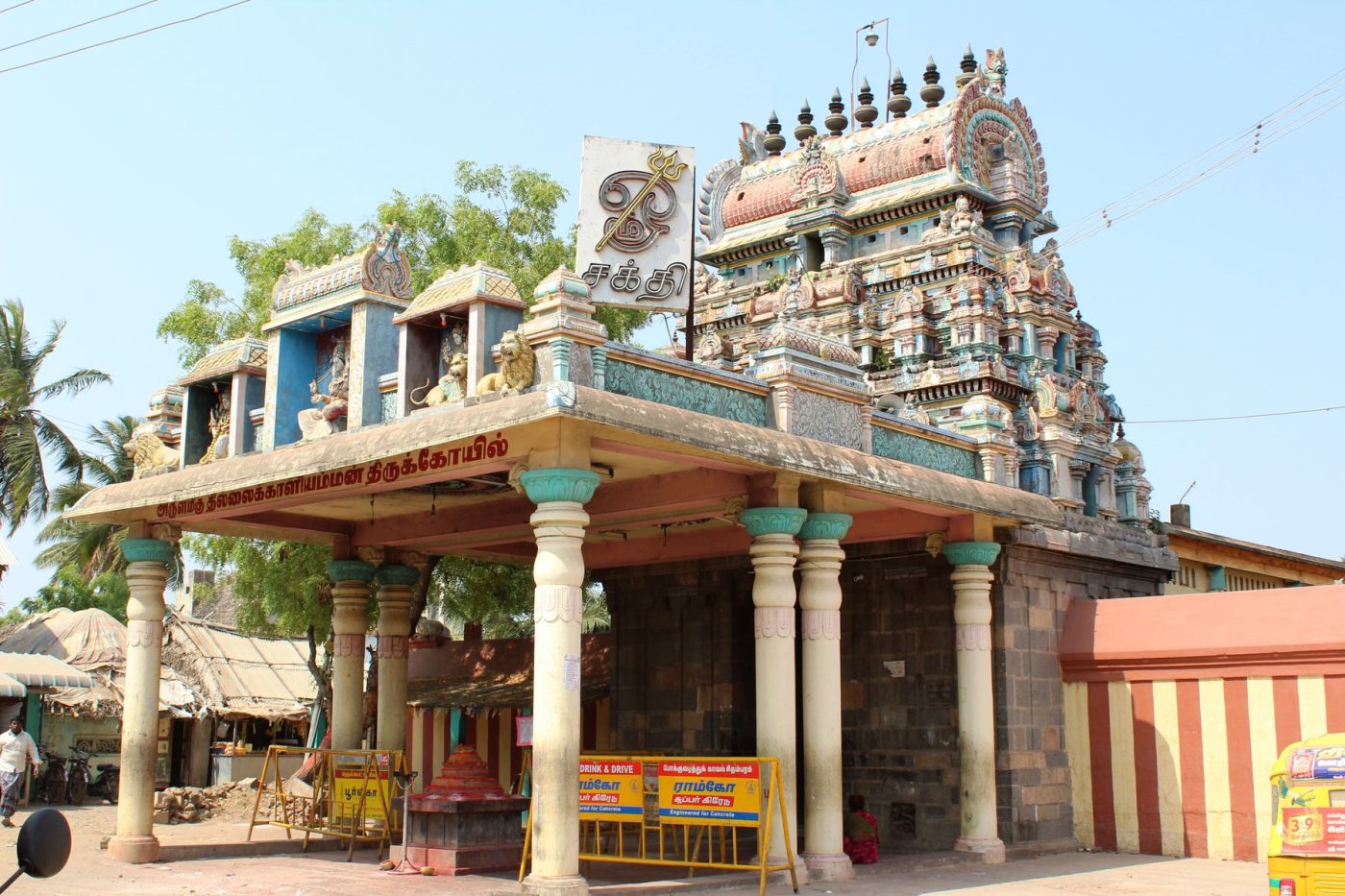
Chidambaram is known for Thillai Nataraja Temple, Thillai Kali Amman Temple and Annamalai University.
Pichavaram Mangrove Forest
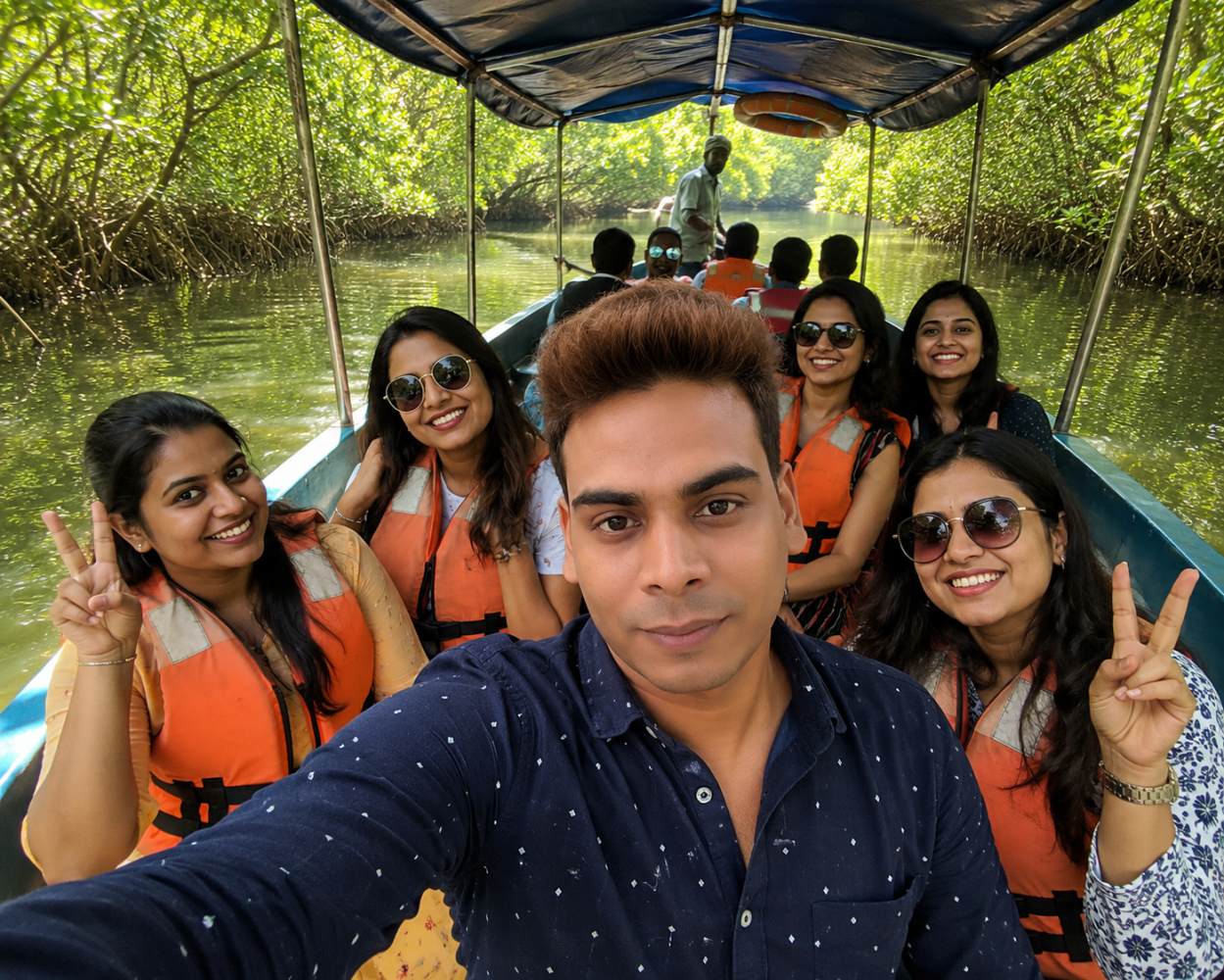
Pichavaram offers authorised boating through mangrove backwaters, subject to current weather, tides and operating arrangements.
Related MJ Marketplace Content
This article can be connected with verified Marketplace companies and listings when available.
- Hotels and guest houses near Poompuhar
- Accommodation in Sirkazhi and Mayiladuthurai
- Restaurants and local dining
- Taxi and regional transport providers
- Heritage guides and tour operators
- Photography services
- Local handicraft and traditional-product businesses
- Tharangambadi and Chidambaram travel articles
Users should verify current company details, reviews, pricing and service conditions before making a booking.
Frequently Asked Questions
Where is Poompuhar located?
Poompuhar is located on the Bay of Bengal coast in Mayiladuthurai district, Tamil Nadu.
What was Poompuhar called historically?
It was known as Kaveripoompattinam or Puhar.
Why is Poompuhar historically important?
It was an important ancient port city associated with the Early Cholas, maritime trade and classical Tamil literature.
What is the Marine Archaeological Site Museum?
It is a specialised museum established to display antiquities recovered through underwater archaeological exploration.
When was the museum established?
The Tamil Nadu Department of Archaeology states that it was inaugurated in 1997.
What are the museum opening hours?
The department currently lists 10:00 AM to 5:00 PM, with Friday as the weekly holiday. Confirm the latest schedule before visiting.
Is swimming safe at Poompuhar Beach?
Swimming safety is not guaranteed. Follow current local warnings and avoid entering the sea when conditions are uncertain.
Can archaeological objects be collected?
No. Do not remove or disturb suspected artefacts. Report them to the appropriate authority.
Is photography allowed?
Outdoor photography is generally possible from public areas, but museum and archaeological-site restrictions must be followed.
What nearby places can be combined with Poompuhar?
Tharangambadi, Sirkazhi, Chidambaram and Pichavaram Mangrove Forest are relevant regional attractions.
Conclusion
Poompuhar is a destination where the sea, the River Kaveri, Tamil literature and maritime history come together.
The beach provides coastal scenery, while the museum and archaeological context reveal the importance of ancient Kaveripoompattinam.
A rewarding visit requires more than taking beach photographs. Visitors should learn about the historic port, respect archaeological areas and follow current sea-safety guidance.
By travelling responsibly, visitors can enjoy the coastline while helping preserve the cultural memory of one of Tamil Nadu’s most important ancient port cities.
Admin
MJ Marketplace editorial content team covering destinations, heritage attractions and useful local travel information.